|
|

History |
The 15th Century
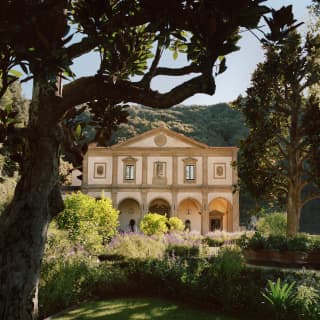
Villa San Michele is named after the church of St Michael the Archangel. The original building was a monastery, founded in the early years of the 15th century for the Franciscan monks. The land on which it stood had been donated by a Florentine family, the Davanzatis, who also contributed to the monastery's upkeep by gifts of woodlands, further buildings and money.
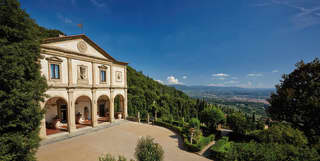
The present building, with its façade attributed to Michelangelo and its imposing loggia, dates from 1600 when it was enlarged and completely renovated by Giovanni di Bartolommeo Davanzati.
The monastery remained the property of the Franciscans until 1808 when the monastic orders were dissolved by Napoleon and, in 1817, it returned to secular use. By this time, many of its most treasured possessions had been dispersed throughout Florence's churches and art galleries. The triptych in the Academia attributed to Niccolò di Piero Gerini and another above the high altar in the church of Santa Trinità both originally stood in this hilltop sanctuary. |
| |
The 20th Century
In 1900 the Villa was acquired by Henry White Cannon from New York, who landscaped the gardens, erected large greenhouses and restored the building after the fashion of the Victorians, by adding wrought iron gates and by applying a rust-coloured patina to the walls. He also converted the courtyard into a winter garden by covering it with a roof of glass and iron.
World War II
During World War II, the Villa was badly damaged and, in 1950, it was bought by Monsieur Lucien Tessier as a private residence.
He set about restoring the 20 first floor rooms, while living on the second floor, but the cost involved was substantial and, to finance it, he turned the villa in to a hotel for those wanting to visit the nearby art treasures of Florence and the surrounding countryside.
More Recently In 1982, Orient-Express Hotels, which already owned the celebrated Hotel Cipriani in Venice bought the Villa San Michele and the surrounding land. |
|
 |
| |
Once more a comprehensive restoration of the buildings was embarked upon, this time with the cooperation of the Florence Fine Arts Authority.
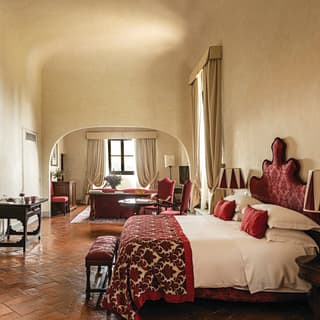
Over the past decade great care and expertise has been engaged to refurbish the entire Villa in a style that provides a luxurious environment whilst maintaining the beauty and heritage of this magnificent building. |
| |
| |
|
|
|